

Alcohol-Free Socialising: How To Handle Nights Out
There’s a moment on a night out that used to mess with my head.
You’re stood at the bar.
Music’s on.
Everyone’s shouting orders.
“Pint.
Double rum.
Gin and tonic.
Pint.”
Then it’s your turn.
For years my answer was automatic.
Beer.
No thinking.
The first time I said, “I’m not drinking tonight,” my chest went tight.
I felt like the whole room stopped and stared.
It didn’t.
But it felt like it.
If you’re used to drinking on every night out, going alcohol-free feels like turning up without part of your personality.
You worry you’ll be boring.
You worry people will think you have a “problem”.
You worry you won’t know what to do with yourself.
I’ve been there.
Here’s what actually helps.
The real problem isn’t the drink. It’s the story in your head.
When I first started going out sober, I thought the battle was with alcohol.
It wasn’t.
The real fight was with the story I’d built over years.
My story went something like this:
- “I’m more fun when I drink.”
- “I’m more confident after a few.”
- “Everyone expects me to be ‘on it’.”
- “I’ll be awkward and stiff without a drink.”
If any of that sounds familiar, you’re not alone.
The truth is harsh and simple.
Alcohol had become part of my identity.
Not just something I did.
Something I was.
“The lad who’s up for it.”
“The one who doesn’t say no.”
So when I took alcohol out of a night out, I felt like I’d taken myself out of it.
That’s why it feels so exposing to walk into a pub sober.
You’re not just refusing a drink.
You’re changing a role you’ve played for years.
Once you see that, it makes sense why it feels so big.
You’re not weak.
You’re just stepping away from a character that used to serve you.
The first sober night out that changed things for me
One of my first proper sober nights out was with lads who knew the old version of me very well.
The big-drinker me.
The lose-track-of-time me.
The one who’d vanish and turn up hours later with a stupid story.
I remember driving there thinking, “What am I doing?
Why didn’t I just say no to this?”
I walked into the pub.
Straight away someone shouted,
“Here he is! What you having?”
This is the moment a lot of people crumble.
I nearly did.
Instead, I stuck to the line I’d decided before I left the house.
“I’m not drinking tonight, mate. I’m driving.”
Said it calm.
No big speech.
No apology.
There were a few raised eyebrows.
One of them laughed.
“You? Not drinking?
Yeah alright.”
Couple of little digs early doors.
Nothing nasty.
Just lads being lads.
I let it pass.
Same answer each time.
“Nah, I’m good. Driving. I want a clear head tomorrow.”
Twenty minutes later, they’d all forgotten about it.
They were too busy talking about work, football, kids, whatever.
Here’s what surprised me.
I was still in the conversation.
I still laughed.
I still made jokes.
The only difference was that as the night went on, they got louder and loopier.
I stayed pretty much the same.
By about 11pm, I’d had enough.
Old me would have pushed on into stupid o’clock.
Sober me finished my drink, said goodbye, and drove home.
I went to bed clear.
Woke up clear.
And that morning, I realised something powerful.
I could do a night out without alcohol and still be me.
Maybe even a better version.
You don’t have to make a big announcement
One thing that puts people off alcohol-free nights is feeling like they have to explain their whole life story.
You don’t.
You don’t need to stand up in the pub and declare,
“I’m changing my life. I’ve had issues. This is my new chapter.”
You just need a simple line that feels true and steady.
Some that have worked for me:
“I’m off it at the moment. Feel better without it.”
“I’m not drinking tonight, I want to be fresh tomorrow.”
“Driving tonight, mate. I like waking up clear.”
Short.
Calm.
Matter-of-fact.
If you say it like it’s a big problem, people react like it’s a big problem.
If you say it like it’s normal, most people move on.
Anyone who keeps digging usually has their own stuff going on.
That’s about them, not you.
Practical moves that make sober nights out easier
Let’s keep this simple and real.
Here are the things that have made the biggest difference for me.
1. Decide your role before you leave the house.
If you walk in thinking, “I’ll see how I feel”, you’re finished.
Decide.
“Tonight, I’m the driver.”
“Tonight, I’m staying sharp.”
“Tonight, I’m not drinking, full stop.”
Have that locked in before the first round.
2. Choose your drink in advance.
It sounds small.
It’s not.
Know what you’re ordering before you get to the bar.
“Lime and soda in a pint glass.”
“Zero beer.”
“Coke, no rum.”
When someone asks, you answer fast.
No hesitation.
No long pause where your brain can jump in with, “Ah go on then, just one.”
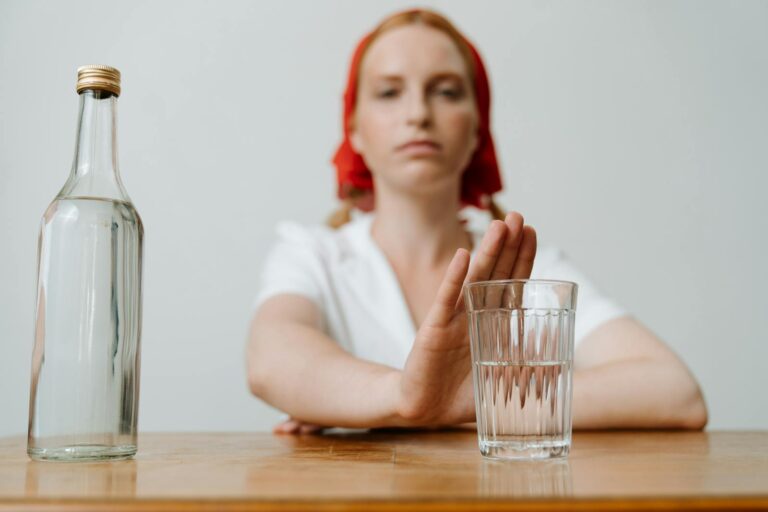
3. Hold something that looks like a drink.
Honestly, this helps.
People question you less when there’s already a glass in your hand.
You feel less “other”.
If your glass looks like everyone else’s, most people won’t notice what’s in it.
4. Arrive later, leave earlier.
You don’t have to be there from warm-up to closing time.
Turn up once everyone is already settled.
The pressure around that first round is smaller.
Leave before it gets messy.
Nothing good happens in the late, late part of the night for a sober person.
You’ve seen the same stories 100 times.
You’re not missing anything.
5. Give yourself something to look forward to in the morning.
This is big.
Don’t just “try to stay sober”.
Make being sober worth it.
Plan a gym session.
A proper breakfast.
Time with your kids.
A walk with a podcast.
Even just waking up, coffee in silence, and feeling proud of yourself.
When you know tomorrow morning is yours, you protect it.
The bit no one tells you: the first 20 minutes are the worst
For me and for a lot of people I talk to, the hardest part of a sober night out is the first 20 minutes.
You’re hyper-aware of yourself.
Your brain is on high alert for judgement.
You’re watching everyone else have their first sips.
After that, something shifts.
The focus moves away from the drink and back to the conversation.
You start actually listening instead of waiting for the buzz.
An hour or two in, you see things you’d usually miss.
Who’s genuinely funny.
Who’s repeating themselves.
Who’s quietly struggling.
Who drinks to cope.
You realise half the “fun” of being drunk was just numbing discomfort.
Once you ride through that first patch a few times, it gets easier.
You stop seeing nights out as a test.
They’re just… nights out.
When your mates don’t get it
Let’s be honest.
Not everyone will clap for this version of you.
Some mates will love sober you.
You’re more present.
Less chaotic.
Easier to trust.
Some will be confused.
They might joke.
They might push drinks at you.
A few might see your change as an attack on their choices.
“You think you’re better than us now?”
This is where you have to hold your line.
You’re not doing this to make anyone else look bad.
You’re doing it because you know what alcohol has cost you in time, money, and mental peace.
If certain friendships only work when you’re half-cut, you have to ask yourself what those friendships are really built on.
You might lose a bit of closeness with one or two people.
But you gain yourself.
And that trade, long term, is worth it.
What surprised me most about sober socialising
A few honest things I didn’t expect:
- I still laugh.
Sounds stupid, but I genuinely thought laughter came from alcohol.
It doesn’t.
It comes from people, stories, connection. - I get bored quicker with rubbish nights.
That’s a good thing.
Instead of forcing myself to stay out till 2am, I can say, “This is dead, I’m off.” - I actually listen more.
I remember what people tell me.
I notice when someone’s not okay. - My anxiety after nights out has dropped massively.
No more “what did I say?” panic.
I was there.
I remember. - The respect I have for myself when I drive home clear beats any buzz I used to get.
That feeling of, “I said I wouldn’t drink tonight and I didn’t” is addictive in a good way.
You don’t have to be sober forever to try this
One thing I want to make clear.
You don’t need to sign a lifetime contract to start doing alcohol-free nights out.
You can say,
“For the next month, I’m doing every Friday sober.”
Or,
“I’m going sober for three big events – see how it feels.”
Treat it like an experiment.
Watch what changes.
Your sleep.
Your mood.
Your bank balance.
Your confidence.
If you like who you are on those nights, keep going.
If you learn you need firmer boundaries long term, that’s useful too.
The bigger picture: who you’re choosing to be
In the end, alcohol-free socialising isn’t about rules.
It’s about identity.
Who are you on a night out?
The person who needs a drink to talk.
Needs a drink to laugh.
Needs a drink to feel part of the group.
Or the person who is the same man with or without alcohol.
Clear.
Present.
In control.
For me, choosing alcohol-free nights out was part of a bigger choice.
To be a dad my kids can rely on.
A partner who doesn’t keep repeating the same mistakes.
A man who builds things instead of constantly repairing damage.
You don’t have to get it perfect.
You will have awkward moments.
You might have slip-ups.
But every sober night out is a brick in a new identity.
The one where you control the drink.
The one where you don’t need it to enjoy people.
The one where you can walk into a bar, order what you actually want, and know that tomorrow morning is yours.
That’s real power.
Quiet.
Solid.
Yours.